What True Physical Hunger Feels Like – As Opposed to Eating for Other Reasons, Which Make You Fat
Why Most People Mistake a Craving for Actual Hunger
I talk to people every day who believe they have no idea what physical hunger feels like. They tell me they eat on a schedule, or they eat because food is in front of them, or they eat because a commercial just showed a cheeseburger. They assume their body simply doesn’t send hunger signals.
That’s rarely true. What’s more likely is that they have been misreading the signals for years.
The Physical Signal vs. The Mental Urge
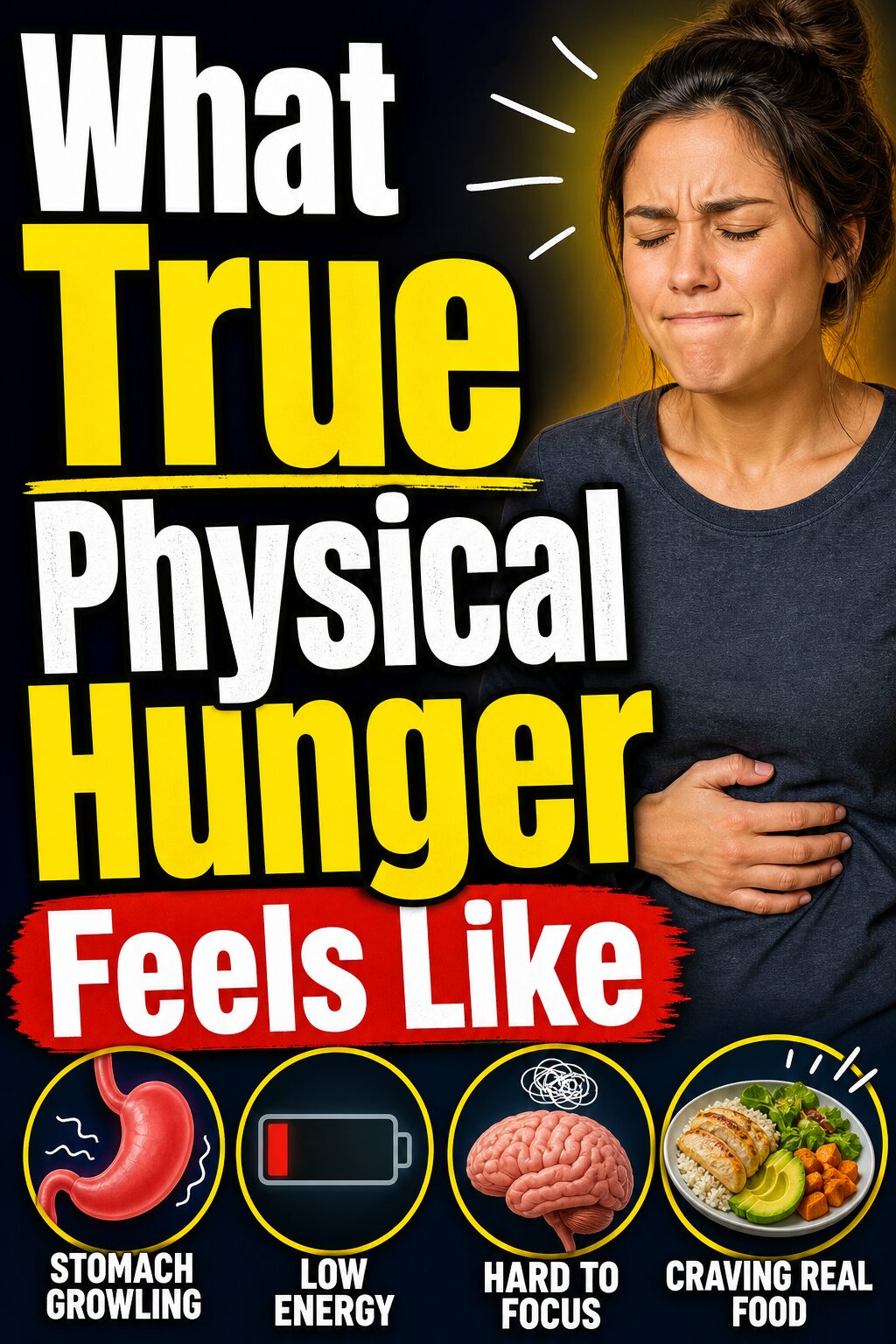
Real physical hunger has a distinct fingerprint. It usually starts as a vague, hollow sensation in the upper abdomen. Not a roar. More like a quiet reminder that your stomach is empty. You might notice a low, steady energy dip—not the crashing fatigue of burnout, but a gentle feeling that you could use fuel.
Some people experience a slight emptiness in the chest or throat. Others get a subtle, growing tension in the stomach that builds over minutes or hours.
Here is the key difference: physical hunger builds gradually. It doesn’t hit you like a wave. You can usually ignore it for a while, and it will increase slowly. It is patient.
What Physical Hunger Is Not
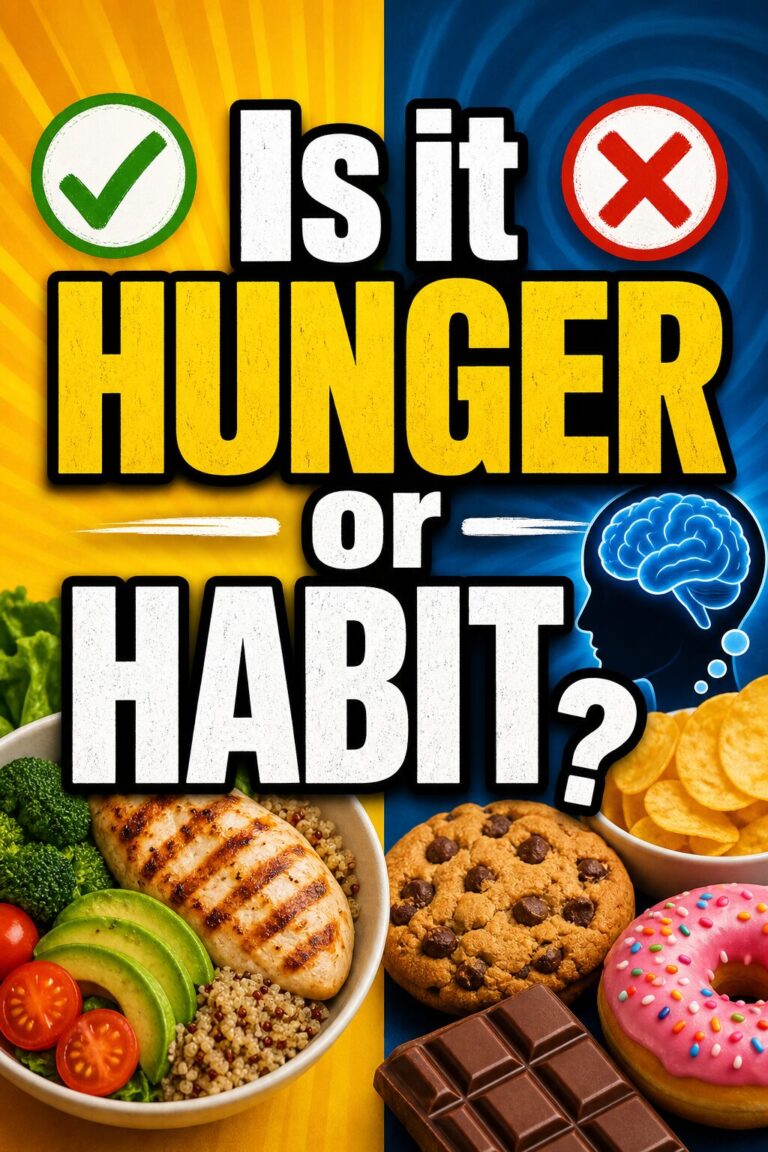
Sudden cravings are not hunger. A craving for something specific—salty chips, a chocolate bar, a specific brand of soda—comes from the brain, not the stomach. It arrives fast. It feels urgent. It demands a specific food.
True hunger will accept an apple. A craving will reject the apple and keep looking for the chocolate.
If the sensation feels like a reflex, not a gradual awareness, it is likely a conditioned response to a trigger. You saw a logo. You smelled popcorn. You felt bored. The brain fired a learned pattern, not a biological signal.
A Few Common Body Cues People Overlook
Some people do not recognize hunger because it does not match the “stomach growling” stereotype. In my experience, these signals are more common:
- A dry or sour taste in the mouth
- Slightly increased salivation when you think about food
- A feeling of light-headedness that is not dizziness
- A subtle loss of focus or mild irritability
These are all normal, physical hunger cues. None of them feel like an emergency.
Why the Confusion Happens
Many people have spent years eating before they felt any physical cue. Scheduled meals, emotional eating, and constant snacking train the body to skip the signal entirely. The brain learns that food arrives before hunger does. The physical sensation never develops because it is never required.
When those people skip a meal by accident, they do not feel hungry. They feel strange. They feel tired. They feel headachey. They assume something is wrong, when really their body is just speaking a language they never learned.
The Practical Takeaway
If you want to reconnect with actual physical hunger, stop eating for four to five hours. Do not snack. Do not drink anything with calories. Then pay attention.
Notice what happens. There is no need to force anything. Just observe. If a dull, empty feeling appears in your stomach within that window, that is hunger. If a sudden, specific craving appears for a bag of chips, that is not hunger.
You can learn the difference in one afternoon.
Most people do not miss hunger. They just misread it. The signals are there. They are just quiet, and they have been drowned out by noise. Turn the noise down and the signal becomes obvious.
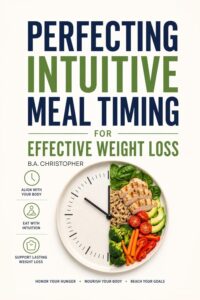
You can see the book “Perfecting Intuitive Meal Timing for Effective Weight Loss: Learn to Find Your True Physical Body Hunger Signal So You Eat Only When the Physical Body Absolutely Needs to Eat” on Amazon here https://www.amazon.com/dp/B0H93NV572