“Is it Hunger or Habit?”
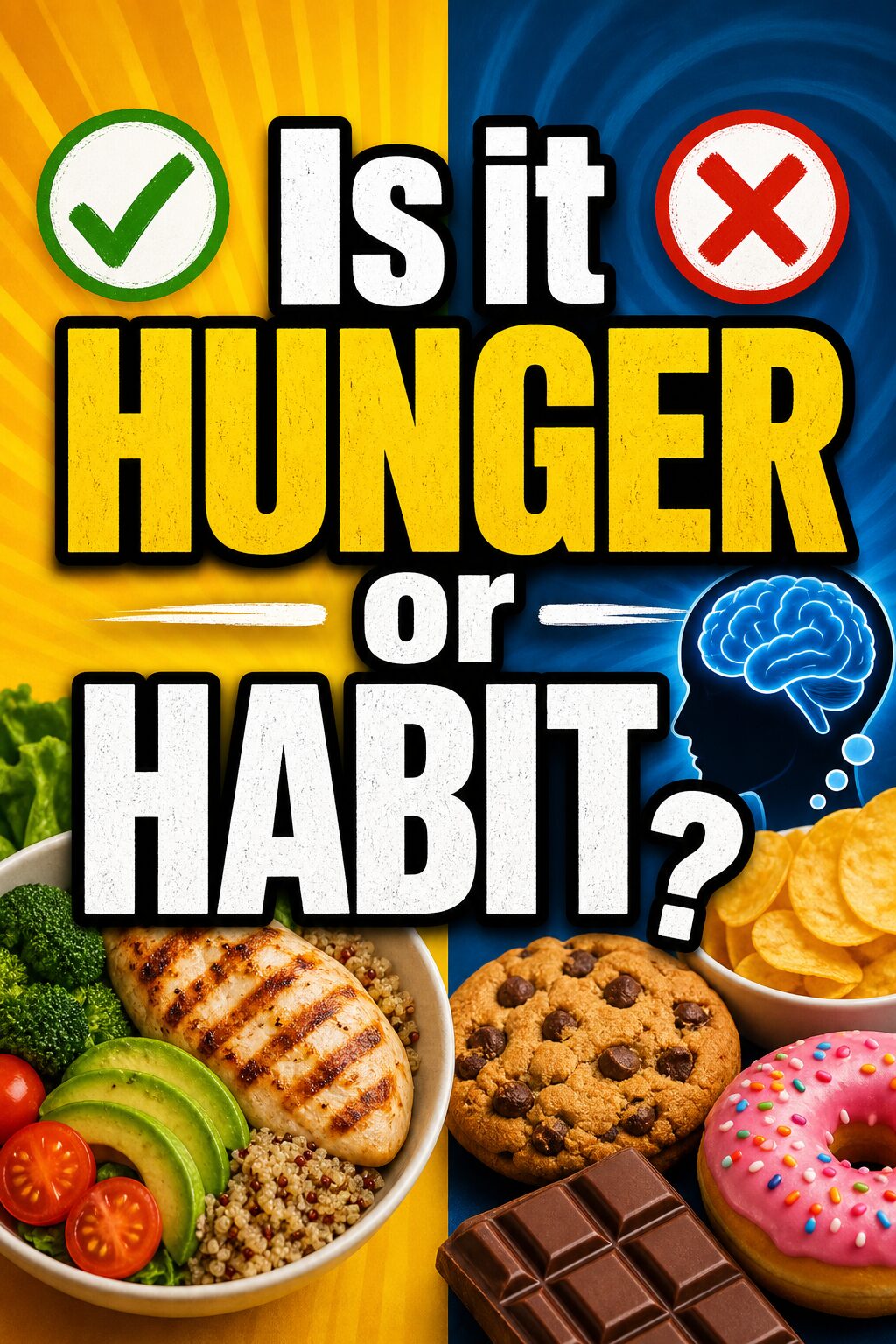
Is it Hunger or Habit?
Most people assume they know when they’re hungry. Your stomach growls, you feel empty, you grab food. Simple.
Except it’s not. The urge to eat can come from four completely different places: genuine physical hunger, a fleeting craving, stress, or plain boredom. And each one requires a different response.
Here’s what to look for.
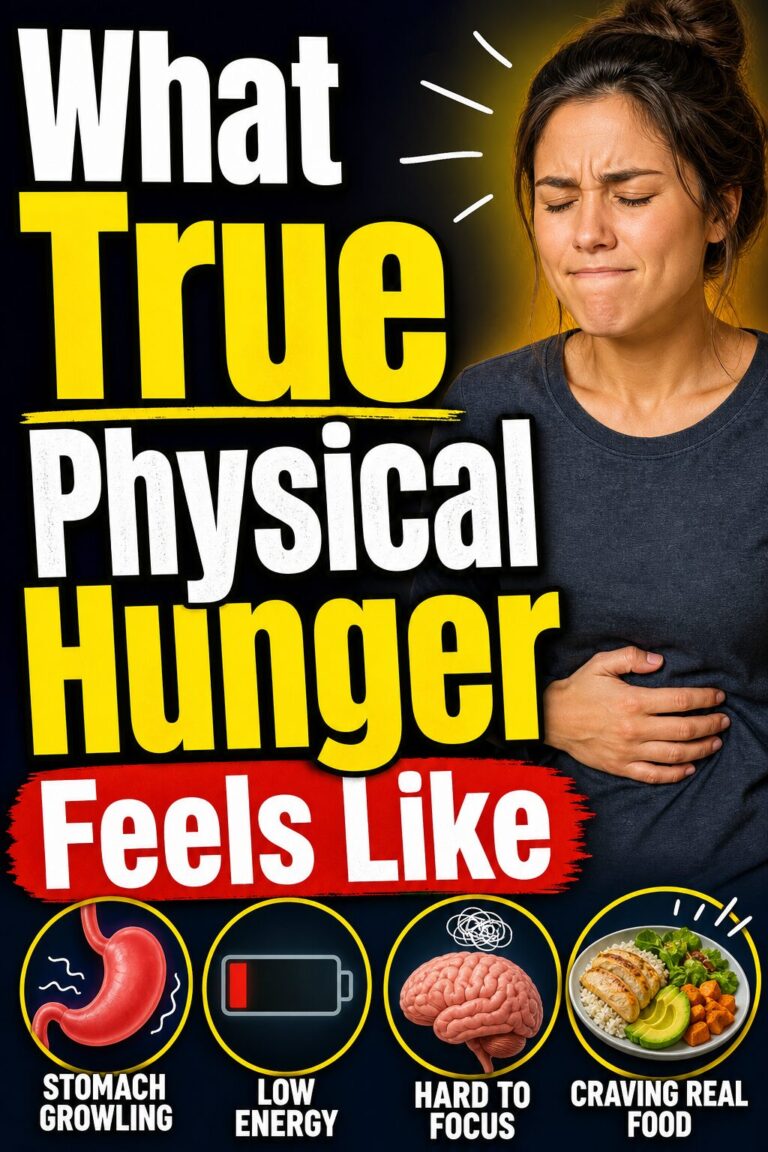
Physical Hunger: Your Body Actually Asking
Real hunger builds gradually. It’s a physical signal—maybe a mild gnawing, low energy, or slight lightheadedness if you’ve gone too long. The key test? An apple sounds genuinely appealing. Not just acceptable, but satisfying. Your body wants fuel, not a specific flavor.
Physical hunger goes away once you eat enough. You stop when you feel comfortably full, not stuffed.
Cravings: The Brain’s False Alarm
Cravings feel urgent. They show up suddenly, often triggered by a sight, smell, or memory—think a commercial or walking past a bakery. You want something specific. Chocolate, chips, pizza. Nothing else will do.
The test: would an apple sound good? If the answer is no, that’s a craving, not hunger. Your brain is chasing a dopamine hit, not nourishment. A craving doesn’t mean you need to eat. It means you need to pause.
Stress Eating: Trying to Swallow a Feeling
Stress eating isn’t about hunger or even a specific food. It’s about relief. Your heart is racing, your chest feels tight, and your hand reaches for something crunchy, sweet, or creamy. The food provides a temporary distraction.
The test: is your stomach actually asking? Usually, the answer is no. The urge comes from your head and your nervous system, not your gut. Stress eating often leaves you feeling worse afterward—guilty, heavy, or still stressed.
Boredom Eating: The Mouth That Needs a Job
Boredom eating is the sneakiest. You’re not hungry, not craving, not stressed. You’re just… idle. So you wander to the kitchen. You open the fridge. You eat without tasting.
The test: would anything do? If you’d eat a stale cracker or a carrot stick just for something to chew, it’s boredom. Your brain is looking for stimulation, not sustenance. The solution is a walk, a conversation, or a small task—not a snack.
How to Tell the Difference
Next time you reach for food, ask yourself a few quick questions:
- Would an apple sound good? (If yes, eat. If no, it’s likely a craving.)
- Would anything do? (If yes, it might be boredom.)
- Is your stomach actually asking? (If not, it might be stress.)
These simple checks take five seconds. They’re the difference between responding to a real signal and feeding a habit.
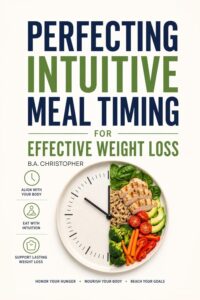
The book Hunger or Habit? walks through this framework in more depth. The goal isn’t to restrict—it’s to learn to read your body’s real signals.
You can see the book “Perfecting Intuitive Meal Timing for Effective Weight Loss: Learn to Find Your True Physical Body Hunger Signal So You Eat Only When the Physical Body Absolutely Needs to Eat” on Amazon here https://www.amazon.com/dp/B0H93NV572